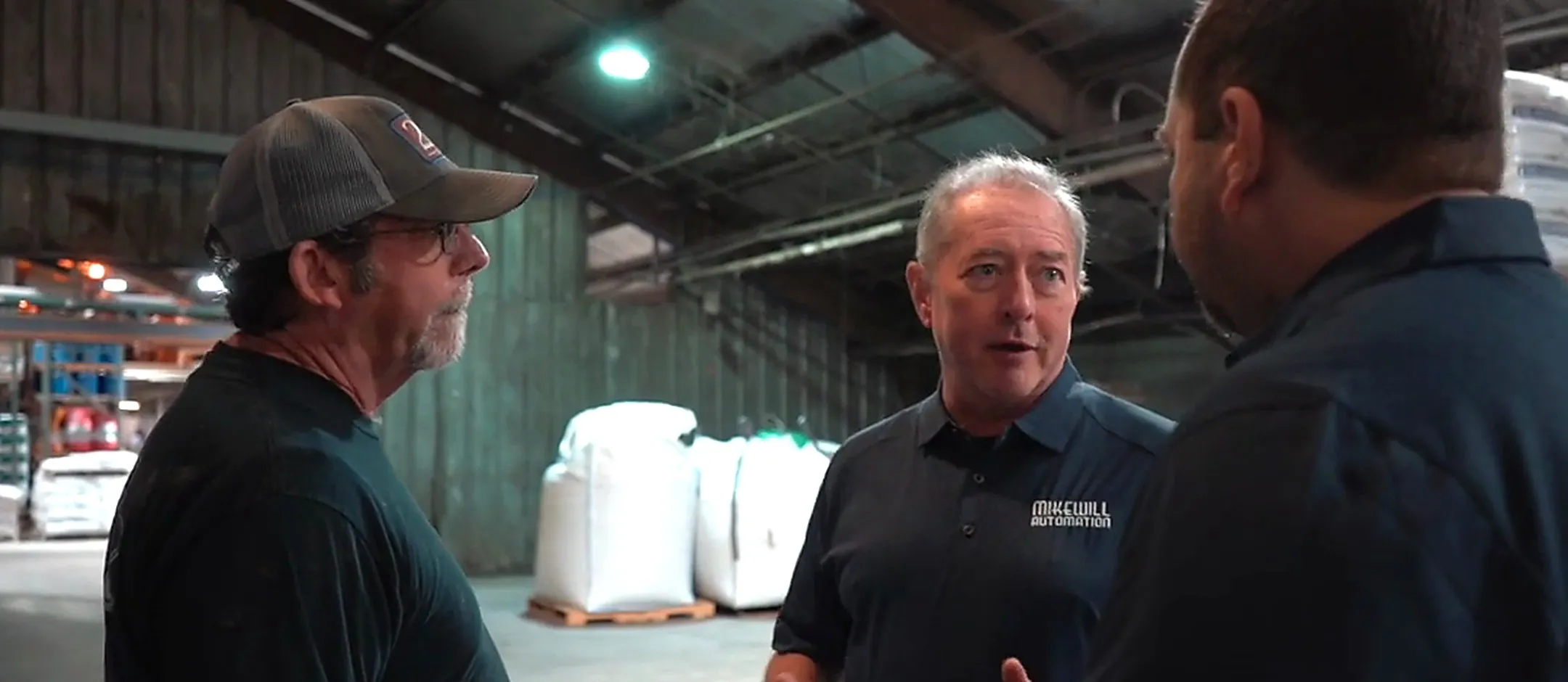
A factory-automation systems integrator is the firm that ties together the robots, PLCs, sensors, motors, and wiring that run a production line and makes them work as one system. A good integrator designs the controls, builds and wires the panels, writes the software, and commissions the whole thing on your plant floor.
What does a systems integrator actually do?
Think of the integrator as the general contractor for automation. Robot vendors sell arms. Drive vendors sell motors. Nobody in that chain is responsible for making all of it run your product, at your speed, on your floor. That accountability is the integrator’s job.
The work usually spans the full lifecycle:
- Plan the system around your throughput, product mix, and floor space.
- Design the controls architecture, panel layouts, and safety circuits.
- Build and wire the control panels and machine electrical.
- Program the PLCs, HMIs, robots, and vision.
- Commission the line — factory acceptance, on-site startup, and tuning.
- Support it long after go-live, when a sensor fails at 2 a.m.
What’s the difference between an integrator and a machine builder?
An OEM machine builder sells a standard machine — a bagger, a filler, a palletizer. A systems integrator engineers a solution for your specific problem, which may mean tying several machines and robots into one coordinated line, retrofitting equipment you already own, or building something that doesn’t exist off the shelf. Integrators live in the space between vendors, where the hard, custom, one-off projects sit.
Why does in-house electrical matter?
A lot of integrators only write code. They program the logic, then hand you a wiring package and tell you to find an electrician. That split is where projects stall and finger-pointing starts — the programmer blames the wiring, the electrician blames the software, and your line sits idle.
When one firm handles both the controls and the industrial electrical, a single accountable team wires the panel, pulls the conduit, programs the logic, and commissions the line. If something’s wrong, there’s one number to call. For Southeast plants running lean maintenance crews, that single point of accountability is often worth more than any spec sheet.
What platforms do integrators work with?
Most industrial automation in Alabama and Georgia runs on a handful of established platforms. A capable integrator is fluent across them rather than locked into one:
| Function | Common platforms |
|---|---|
| PLC / controls | Allen-Bradley / Rockwell |
| Robotics | ABB, FANUC |
| Machine vision | Keyence |
| Networking | EtherNet/IP, OPC UA |
The point isn’t the logos. It’s that your integrator should choose the right tool for the job and be able to service what they install, whether that’s a robotic weld cell or a servo-driven bagging line.
When should a manufacturer bring in an integrator?
Bring one in when the problem crosses boundaries. A single new machine, you can often buy. But when you need to raise throughput on an existing line, add robotic palletizing, replace obsolete PLCs without losing recipes, or coordinate several machines into one system, that’s integration work. The earlier you involve the integrator, the more they can de-risk — catching floor-space, safety, and integration issues while they’re still cheap to fix on paper.
A regional integrator carries a real advantage here. Proximity means site visits, not video calls. Senior access means the engineer who designs your system is the one who answers when you call. For a plant in Huntsville, Birmingham, Atlanta, or Guntersville, that closeness turns support from a ticket queue into a same-day drive.
Frequently asked questions
What does turnkey automation mean?
Turnkey means one partner takes your project from concept to a commissioned, running line — design, panel build, wiring, programming, and startup all under one roof. You’re not coordinating separate vendors for controls, electrical, and robotics. You get a working system and one team accountable for the outcome.
Do I need a systems integrator or can I hire the robot vendor directly?
Robot vendors sell and support the arm, but they don’t engineer your full line, wire your plant, or make the robot coordinate with your conveyors, PLCs, and safety systems. An integrator handles the whole system. For anything beyond a standalone cell, you’ll want an integrator to tie it all together.
How do I choose a good systems integrator?
Look for one that handles controls and electrical in-house, has real case studies in your industry, works with the platforms you already run, and stays reachable for support after go-live. Ask who actually answers the phone when a line goes down — proximity and senior access matter more than a long partner list.
Have a hard automation project on your hands? Talk to an engineer at Mikewill Automation, or call (256) 293-5684.